Hamburg is one of those cities that gets better the longer you stay. It's got a music and nightlife scene that's shaped culture well beyond its borders, a design and advertising industry that's among the strongest in Germany, and a port city energy that keeps things grounded and a little gritty in the best way. This guide covers the studios, neighbourhoods, bars, and spots that matter for people working in the creative industries.

Hamburg has a confidence that comes from not needing to prove anything. It's Germany's second biggest city and it knows it, but it wears that lightly. The creative scene here is rooted in music, media, and commercial design, and there's a long tradition of craft and quality that shows up in the work. The neighbourhoods are distinct and walkable, the food scene has really found its feet in the past decade, and the harbour gives the whole place a scale and atmosphere that's hard to replicate.
Discover the city’s most creative districts, from vibrant cultural quarters to emerging areas where artists, designers and makers shape the local scene.
Schanzenviertel, also known as the Schanze, is Hamburg's most iconic creative quarter, centred around Schulterblatt street and the old water tower. It has a strong counter-cultural history that has gradually mellowed into a neighbourhood full of independent design boutiques, specialty coffee bars, and coworking spaces, while keeping a genuine bohemian edge. If you're looking for where Hamburg's freelancers, designers, and makers actually hang out day-to-day, start here.
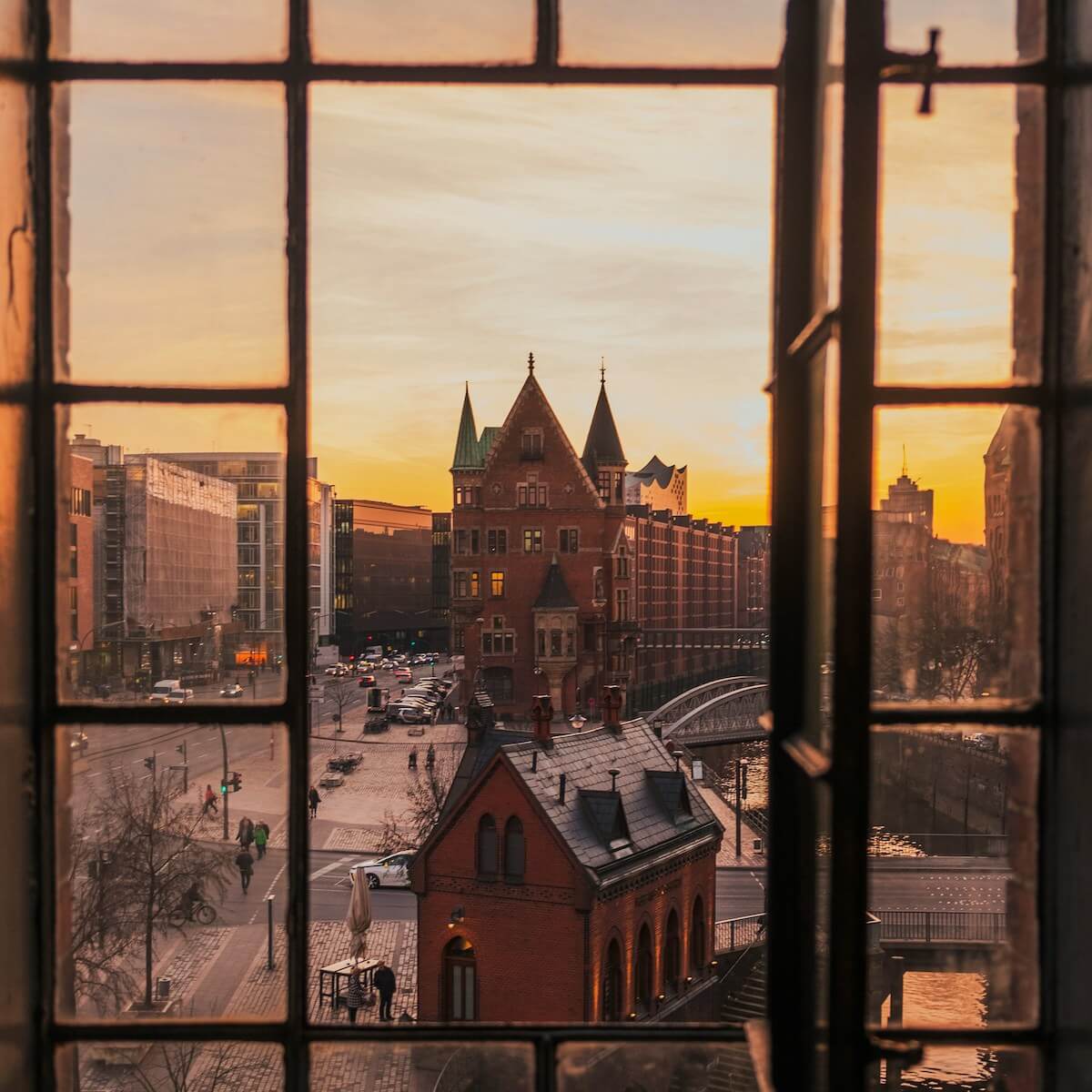
HafenCity is Hamburg's most architecturally ambitious neighbourhood, built on reclaimed port land along the Elbe and home to the Elbphilharmonie, the Deichtorhallen, and a growing cluster of studios, agencies, and cultural institutions. The architecture alone is worth the walk, with standout buildings by Herzog and de Meuron and others lining the waterfront. It's where Hamburg's relationship between old industrial infrastructure and contemporary creative culture is most visible.
Ottensen, inside the wider Altona district, earned its "Little Paris" nickname through narrow cobblestone streets, indie bars and cafes, and a creative-trades heritage going back to its 19th-century workshop culture. It's quieter than the Schanze but equally design-conscious, with some of Hamburg's best specialty coffee roasters, a legendary arts cinema, and creative coworking setups tucked into old courtyards.
Gängeviertel is a cluster of 19th-century courtyard buildings near the city centre that 200 artists and activists occupied in 2009 to stop demolition, and have been running as a self-managed creative space ever since. The area hosts studios, a screen-printing workshop, event halls, theatre rooms, and a radio studio, all run cooperatively. It's one of the few places in Europe where you can see a successful grassroots model for keeping affordable creative space in a gentrifying city centre.
Karolinenviertel, just south of the Schanze, is one of Hamburg's most design-dense neighbourhoods, free of chain stores and full of owner-run studios doubling as shops. Centred around Marktstrasse, you'll find local clothing designers, graphic studios, ceramics makers, and concept stores that produce and sell right on the premises. It's compact enough to walk in an hour but surprising enough to keep you coming back.
Find inspiring coworking spaces where freelancers, studios and creative professionals work, collaborate and connect in a shared environment.
betahaus Hamburg has been the go-to coworking spot for Hamburg's freelance and startup crowd since 2010, set across five floors in the heart of the Schanzenviertel at Eifflerstrasse 43. The vibe is collaborative and informal, with flex desks, fixed desks, team offices, and a regular programme of networking events. It's genuinely community-driven rather than just a desk rental, and the Schanze location puts you a short walk from some of the city's best coffee and lunch spots.
Impact Hub Hamburg at the Gänsemarkt draws a community of creatives, entrepreneurs, and social innovators who want more than a hot desk. It's part of the global Impact Hub network, which helps with connections beyond the city, and the Hamburg space runs a regular programme of workshops and events on top of flexible coworking memberships. A good choice if you want to be around people working on purpose-driven projects.
Fette Höfe is a small, deliberately curated coworking space in Ottensen built around a community of graphic designers, architects, animators, web designers, and copywriters. With only 12 workstations, it feels more like a shared studio than an open-plan office, which is the whole point. It's been running since 2013 and sits a three-minute walk from Altona station.
Mindspace Hamburg is set inside the historic Klöpperhaus near Rödingsmarkt, a listed building with high ceilings and big windows that gives the space an industrial-loft feel despite being right in the city centre. It works well for creative freelancers and small teams wanting a proper professional setup without the sterile corporate atmosphere.
Explore the cafés, bars and restaurants loved by creatives for meeting, working, socializing or simply finding inspiration over great food and drinks.
Nord Coast Coffee Roastery on Deichstrasse is one of the best spots for a working coffee close to HafenCity and the Speicherstadt. They roast with a focus on direct sourcing and donate 50 cents per kilo sold to social projects. Strong breakfast and brunch options round it out if you're making a morning of it.
Marshall Street brings an Australian coffee-shop sensibility to Hamburg's Altstadt, with some of the best flat whites in the city and a breakfast menu that actually earns the hype. The Schopenstehl location is polished and compact, drawing a mix of agency folk, freelancers, and design professionals who know their coffee. Worth knowing about the second location on Waterloostrasse in the Schanze too.
Bullerei is Tim Mälzer's restaurant and deli set inside a heritage-protected livestock market hall on Lagerstrasse in the Schanzenviertel. The industrial setting is a genuine one, the food is seasonal German with some international influence, and the deli counter is the go-to for a quality lunch pickup. It sits right next to the Elbgold roastery, which makes this corner of the Schanze one of the best food blocks in the city.
Elbgold has been roasting specialty coffee in the Schanzenviertel since 2004 and is arguably Hamburg's best-known homegrown roastery. The Lagerstrasse location houses both the roasting operation and a big, relaxed cafe, so you can watch them work while you drink. Single-origin filters, an in-house bakery, and a commitment to direct trade make this the benchmark for Hamburg coffee culture.
A curated selection of galleries, museums and contemporary art spaces that showcase the city’s cultural pulse and creative expression.
Deichtorhallen Hamburg occupies two enormous former market halls between the city centre and HafenCity, totalling over 10,000 square metres of exhibition space. One hall focuses on contemporary art, the other on photography, making it one of the most important photography venues in Europe. The industrial architecture is spectacular, and the scale of what they can show here is genuinely rare.
Kunstverein in Hamburg is one of the oldest art societies in Germany, founded in 1817, but it programs with a sharp focus on experimental and socially engaged contemporary art. With no permanent collection, every visit means a new show, and the artist talks and workshops make it feel more like a working part of the creative community than a traditional institution.
Hamburger Kunsthalle is one of Germany's most significant art museums, spanning three interconnected buildings near the Hauptbahnhof with collections running from medieval painting through to a purpose-built contemporary wing. It runs around 20 temporary exhibitions a year, so there's almost always a reason to go back. The contemporary section in particular draws international attention and is a reliable bellwether for what's happening in German art.
Browse design stores, bookshops and concept shops offering everything from art books to local design objects and creative inspiration.
smow Hamburg is part of a design furniture network with real substance, showing a carefully selected range of modern and classic furniture design across their Hamburg showroom. It's the kind of place where you can spend an hour looking at a chair and not feel judged for it. For anyone with a professional interest in furniture design or interior architecture, it doubles as a reference point for what the market looks like right now.
LokalDesign on Schulterblatt in the Schanzenviertel is a furniture and interior design concept store with a specific focus on emerging and local designers, mostly selling pieces in small series or as unique items. They also run workshops where you can develop your own living space or make something yourself, which gives the shop a participatory edge that sets it apart from regular design retail. Been championing design newcomers since 2011.
Discover hybrid spaces, community hubs and relaxed hangouts where creatives gather, collaborate and exchange ideas.
Join local meetups, creative circles and communities that bring people together through shared interests and collaborative energy.
Whether you are a graphic designer, a photographer, a marketer, or a filmmaker, the Creative Lunch Club gives you the chance to regularly meet other creatives in your city for lunch.
Join the Creative Lunch Club and meet other professional creatives for lunch.CreativeMornings is a global series of free, monthly morning talks that bring creatives together for coffee, inspiration, and good vibes.
The key festivals, fairs and conferences that draw creative professionals together for talks, workshops, exhibitions and cultural experiences.
Reeperbahn Festival is Europe's largest club festival and music industry conference, transforming St. Pauli every September across 80 venues with 600 events and 50,000 attendees. It started in 2006 as a spotlight on emerging talent in Hamburg's legendary nightlife district and has grown into one of the most important events in the international music and creative industries calendar. If you're in Hamburg in late September, it's unavoidable.
Hands-on spaces offering tools, equipment and workshops for anyone interested in making, crafting, experimenting or bringing creative ideas to life.
Attraktor is a 300-square-metre maker and hacker space in Altona that's been running since 2010. The space covers woodworking, metalworking, sewing, electronics, and physical computing across multiple dedicated workshops, and membership gives you access to everything from a laser cutter to a portal milling machine. It draws a mix of artists, engineers, and technologists who like building actual things.
Fab Lab Fabulous St. Pauli was Hamburg's first fabrication laboratory when it opened in 2011 and it's still one of the best community maker spaces in the city. Based in the Speicherstadt at Stockmeyerstrasse 43, it gives members access to 3D printers, laser cutters, CNC milling machines, and electronics equipment, all within a non-profit, membership-funded structure. The goal is genuinely democratic access to digital production tools.
Venues and stages that showcase live music, film screenings, performances and multidisciplinary shows across the city.
Fabrik is a cultural centre and live music venue in Ottensen that has been running inside a former woodworking machine factory since 1971, making it one of Hamburg's oldest alternative culture spaces. It hosts international touring bands, theatre, and political events under the original brick factory roof, and its founding ethos of "culture for everybody" has genuinely stuck. One of those venues where the building itself is part of the experience.
Zeise Kinos in Ottensen is housed inside a former ship propeller factory from 1869, which gives the cinema a unique industrial-heritage character that's hard to replicate. It screens art-house and world cinema across three halls, and also hosts poetry slams, readings, and music specials. It's been a cornerstone of Ottensen's cultural scene since 1993 and is one of Hamburg's most atmospheric places to spend an evening.
Kampnagel in Winterhude is Germany's largest independent production venue for the performing arts, housed in a former crane factory and running six halls with capacities from 150 to 2,500. The programme spans dance, theatre, performance, music, and visual art, and it hosts the major Reeperbahn Festival industry conference as well as an annual international summer festival. If something interesting and experimental is happening in Hamburg, there's a good chance Kampnagel is involved.
Parks, lookout points and outdoor spaces perfect for taking a break, finding inspiration or meeting others in a more relaxed setting.
The Außenalster is Hamburg's inner-city lake, and the 7km loop around it is one of the best urban walks or runs in northern Germany. On a clear day the views across the water towards the city are properly beautiful, and the Alsterpark on the northwest shore is full of people reading, sketching, and having the kind of conversations that only happen when you're away from a desk. Canoes and paddleboards are rentable in summer from several spots on the waterfront.
Planten un Blomen is a 47-hectare park right in the middle of the city, sitting between the Schanze, St. Pauli, and the Congress Centre. It has Europe's largest Japanese garden, a full tropical greenhouse, and a water-light show on summer evenings that's genuinely worth seeing. It's the kind of place you walk through on the way somewhere else and end up staying for an hour.
A selection of design-forward and boutique hotels offering creative atmospheres, thoughtful interiors and inspiring stays for visiting creatives.
SIDE Design Hotel in Hamburg's Neustadt is a five-star hotel built in 2001 with architecture by Jan Störmer and interiors by Milanese designer Matteo Thun. The 28-metre atrium with its changing light installation by Robert Wilson is the centrepiece, and the rooftop terrace with pool and spa adds to the appeal for anyone who wants design credentials with genuine comfort. It's a member of Design Hotels.
TORTUE Hamburg is a boutique hotel in the city centre with interiors designed by Stephen Williams Associates and David Chipperfield Architects. The building dates from 1888 and the renovation preserved original columns, soaring ceilings, and frescos from 1910 while adding five bars and three restaurants. It's the kind of hotel where the design is worth looking at in its own right, not just staying in.
I love Creative Lunch Club because it harnesses the most human way of connecting, sharing a meal. It's an effortless way for creatives to build diverse connections and friendships across various fields and meet people they wouldn't otherwise.
Creative Lunch Club is a great way to get off your ass, meet random creatives, and share a meal. Perfect for getting inspiration, energy, and a different angle on things.
Everything about Creative Lunch Club makes me happy - the concept, the people and the vibe. It is such a fun way of getting to meet like-minded people and make new friends in your city!